


The overall industry seems to have understood the need to change the attitude from selling what it has to what the customer needs. This realization has led to the development of add-ons and modular products which are quite flexible in nature.
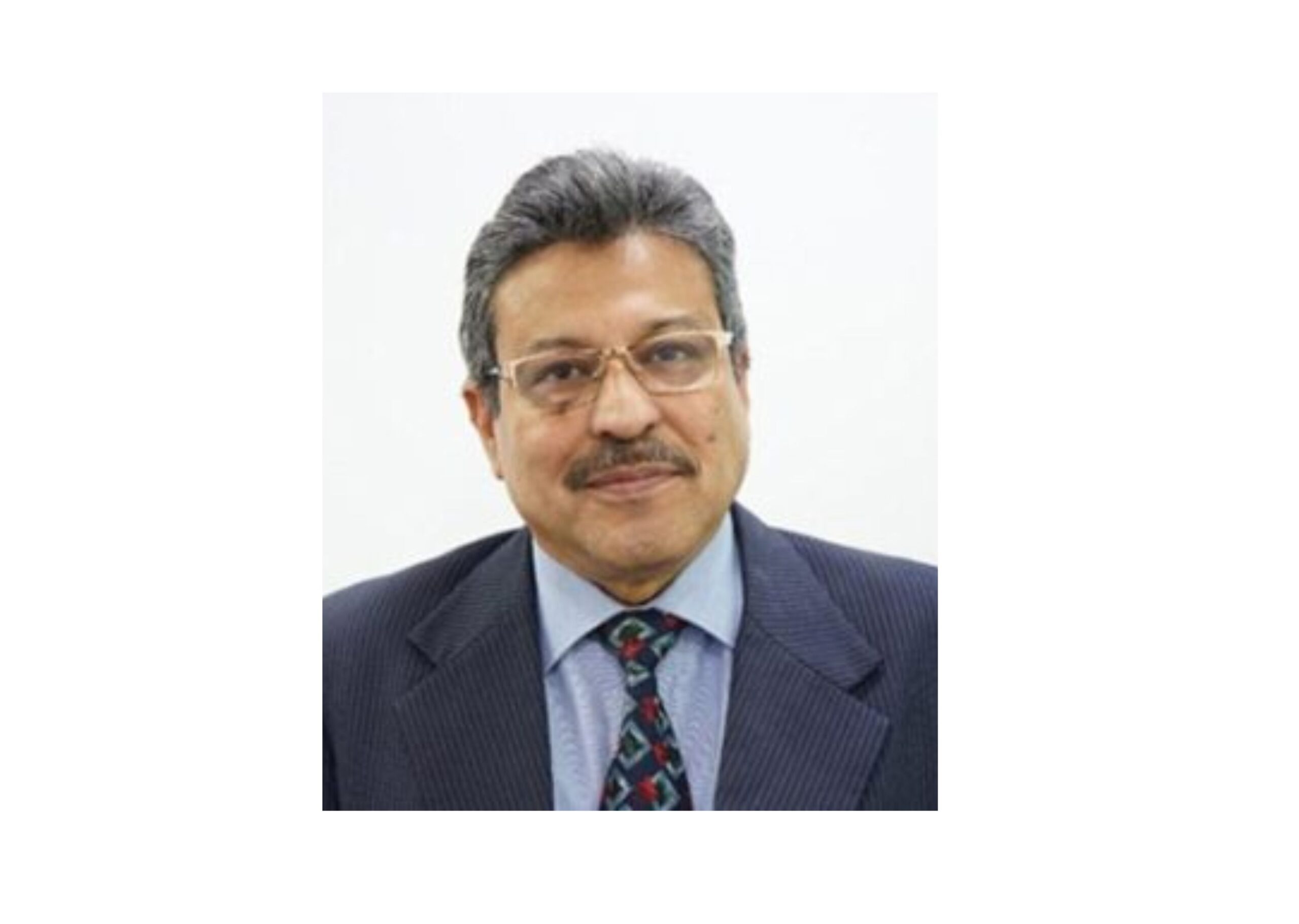
About Mr. Lahiri
Mr. Samiran Lahiri is widely regarded as one of India’s most accomplished insurance professionals and consultants, known for his strategic insight, deep technical acumen, and exemplary leadership across diverse domains of the insurance and financial services industry. He began his career in 1987 as a Direct Recruit Officer with The Oriental Insurance Company Ltd., marking the start of a distinguished professional journey that has spanned over three decades. Over the years, Mr. Lahiri has held several prominent leadership positions both in India and overseas – including Chief Operating Officer at Rainbow Insurance, Mauritius; President – Financial Products Distribution at Peerless Developers Ltd.; and Chief Executive Officer at Asia Meditech Solutions, Nepal. Since 2015, he has been steering Preferred Partners Insurance Brokers Pvt. Ltd. as its Executive Director and CEO, driving the firm’s growth, innovation, and client-centric excellence. An alumnus of Jadavpur University, Mr. Lahiri holds a bachelor’s degree in Economics, followed by a postgraduate degree from the distinguished Centre for Economic Studies and Planning (CESP) at Jawaharlal Nehru University (JNU) – one of India’s most reputed schools of economics.
A passionate academic at heart, Mr. Lahiri is deeply committed to mentoring and teaching. He is associated with premier management institutions including IIM Calcutta, IIM Bangalore, and BIMTECH, where he serves as visiting faculty/guest faculty, sharing his extensive industry experience and fostering the next generation of business leaders.
Q: According to you, what has been the marked change in underwriting attitude/scenario of the General Insurers of India in modern times?
A: In exclusively public sector times, anyone in the mainstream insurance irrespective of the level of office used to be trained at least as a general underwriter, if not a specialist underwriter of a particular line of business. If I may elaborate, at a Branch office level, the Assistant, Senior Assistant, AAO and the Branch Manager used to underwrite Motor, Fire, Marine Cargo, Miscellaneous and Rural lines of business relatively easily and freely subject to their underwriting limits and occasional help from the Divisional office.
So was the case in Divisional offices where there used to be full-fledged underwriting departments for these lines of business with extremely knowledgeable Underwriters, who were respected and knew their job quite well both from a theoretical and applied point of view. The Clients, Agents, the Development officers and the Divisional /Senior Divisional Managers relied on them heavily. Though Regional Office and the Head Office were not underwriting offices, the specialist underwriters used to sit in these offices and help the lower offices in advisory capacities since these officials grew an expertise in handling significant and complicated risks.
Cut to modern times and especially in the private sector offices, where one sees a host of Relationship Managers who have to refer everything from a cat insurance to an aircraft insurance to their respective Underwriters. Virtually for any line of business, the acceptance is based on a dedicated team of people known as Underwriters who are not truly integrated to the day to day business acceptance process by the foot soldiers. Be that as it may, the main problem lies in the underwriting attitude where for most of the private companies, the scenario is either black or white without much of a grey area. Extremely low PML risks are gladly accepted.
Risks with slight complication or uniqueness fall under the declined risk. There are some private companies with good underwriting personnel from public sector insurance companies or from some Insurance schools, who are doing a fantastic job by underwriting complicated risks but the general scenario is one of accepting or rejecting without any management of the same through various specific terms, warranties, capping of sum insured, enhancement of deductibles, pre-acceptance risk inspections etc. Unfortunately, in modern times I do not find much endeavour in negotiating tailor-made Re-Insurance by the mid-level private Insurers.
In past, the attitude was to accept even the bad risks with restrictive conditions and boundary which is somewhat missing in modern times where the underwriting that too by the selective few are templated. There are exceptions but by and large, it seems to me that the whole general insurance industry of India has become risk averse. I say so completely keeping in mind the constant onset of natural Catastrophes. Still, we have a significantly developed Re-insurance market and alternative risk transfer methods to take care of these events. I keep telling my students that go, play and on a bad day lose the match but never give a walk over.
In medical Insurance, an extremely innovative product with the principle lock the clock is in place where the premium for the entry age remains locked till the time any hospitalization claim happens.
Q: Do you see a change in General Insurance product landscape in India?
A: There has been definitely a very positive change in the product landscape in the General Insurance industry of India. Though to the best of my knowledge in India, still we do not sell ghost insurance or romantic break up insurance or alien abduction insurance, we sell various innovative and customer friendly products like Cyber Insurance, Climate risk Insurance, Electric Vehicle Insurance, Trade Credit Insurance and various kinds of unique liability insurances. “Pay as you use” products are in place, health insurance products linked to life style are also available which are seamlessly enabled by telematics.
In medical Insurance, an extremely innovative product with the principle lock the clock is in place where the premium for the entry age remains locked till the time any hospitalization claim happens. Entry of selling platforms, aggregators are helping in insurance distribution through online purchase, a favourite of the young generation and urban professionals equally. Another significant change in the product landscape as per my reckoning has been to go for simpler policy terms and wordings making understanding of the terms of the policy much easier for the policy holders. Attempt to have bite sized products is another welcome feature in the market which will find favour of the middle class, low middle class and rural population. The public sector insurers seem to be reasonably confident these days about writing special contingency policies which used to be a tricky proposition few decades ago.
I feel that for this area, the Re-insurance support is good and the underwriting capacity of the direct underwriters has also gone up. The overall industry seems to have understood the need to change the attitude from selling what it has to what the customer needs. This realization has led to the development of add-ons and modular products which are quite flexible in nature. IRDAI has played a great role in standardizing the health insurance and fire policies for residential risks, MSME and SMEs. “Use and file” procedure has replaced the erstwhile “file and use” procedure. In the product landscape, we seem to be following the old adage that necessity is the mother of invention.
Q: Your view on claims efficiency of the Insurers…
A: As the taste of the pudding lies in its eating, the taste of the Insurance Company lies in its claims settlement. No publicity of an Insurance Company is better than the publicity achieved through expeditious settlement of genuine claims. My personal view is that the private sector is handling cashless motor claims quite efficiently. For high end cars, the private sector insurers are often found to be quite generous in authorizing and allowing settlement of the claims which perhaps makes motor workshop business more lucrative than insurance business.
As an insurance professional, having worked in developed economy, less developed Asian economies having settled more than perhaps 1,50,000 claims in my 38 years career, I was perhaps not as generous in settling motor claims as I see now in motor claims settlement in India. Having said that, I must also mention here that the settlement time is far more than the 45 days mandate of the IRDAI. Any reimbursement claim takes on an average of 90 days. For high value claims, such timeline could be anything. The retail customers albeit with exception, view General Insurers of India not very positively as far as claim settlement is concerned.
Simple questions at the time of taking the premium turn into complex questions at the time of a claim. India understandably has 6 Crore SMEs with an insurance coverage less than 5%. Apart from the individual claims, claims of these SMEs are also a problematic area since documentation and other guidance are missing. While Third Party Administrators (TPA) are an important entity in medical claims, the general perception about their service is not good because of their perceived lack of empathy and robotic heartless approach to any medical claim where human touch is needed the most. More often than not, the computers of the TPAs are the masters and human beings simply follow instructions of their masters.
In conclusion, I personally feel that apart from the delay in settlement and asking for too many documents, the overall scenario of claim settlement of about 83% in the last financial year is not too bad. The claims repudiation ratio on number of claims has been quite good in the previous fiscal for almost all the public sector companies ranging between 6.10% and 3.31% except for one Insurer. The position however did not appear so favourable for the private sector General Insurers where the claim repudiation ratio has varied between 13% and 38% except for few companies. The average claims repudiation ratio on number of claims was about 20%.
As an insurance professional, having worked in developed economy, less developed Asian economies having settled more than perhaps 1,50,000 claims in my 38 years career, I was perhaps not as generous in settling motor claims as I see now in motor claims settlement in India.
Q: Being in the industry for nearly 4 decades, please tell us something about your impression on the functioning of the surveyors and the element of empathy.
A: In one of my articles in past, I had mentioned that the price of insurance, called premium, is the most loved child of the family, no matter how unethically he is brought up. The hated child is the unwanted but the most helpful child of the family at the time of distress. His name is CLAIM. There was always a religious Guru for this family called the surveyor who has become more powerful these days influencing the most helpful child not always in a positive manner. The surveyors in past used to be guided by the insurance companies about proactive way they should approach a client and advise the client about the way forward in assessment of the claim.
Indeed the requirement of the documents used to be there but I see the current practice of starting the story by way of dumping the policy holder with a requirement of documents more formally called LOR for documents. The documents become the mantra for this Guru and slowly the deity goes to oblivion. A property loss assessor has to rely on primarily the observation of physical loss minutely, measurement, circumstances of the loss, verification of the prices of the affected items, local enquiry, methods and suggestions on loss mitigation and finally exploring the salvage market. Needless to mention that he has to keep in view the central tenets of the worship which are the policy coverage and exclusions.
Unfortunately, the whole inputs for this assessment are provided through various documents to be arranged by the Insured. What is mentioned in the documents takes a front seat and what is seen loses its priority. What pains me the most is the fact that now a days, surveyor’s verdict in most of the cases is final. No Insurer treats them as simply loss assessor but as the final authority for settlement of the claim. This to my reckoning is not a healthy trend since the claimant is a customer of the Insurance Company and not a customer of the surveyor. The claim after all is paid by the Insurer and not by the surveyor. I have seen extremely non-empathetic behaviour of the surveyors in case of simple fire claims for residences that too towards senior citizens which eventually brought bad name to the Insurer. Incidentally, I have noticed that Insurers are always happy to clear small claims of middle class Insureds without raising much questions and in fact happily waiving off many requirements.
The negative attitude of the surveyors often becomes a bottleneck for exercising the friendly claim settlement attitude of the Insurers. There are many exceptions and there are numerous friendly and competent surveyors but had the overall community response of the surveyors been one of help and empathy, the general perception about their friendliness would have been different in the society. This is unfortunate and in India, the perception is somewhat similar to the perception about the police.
Q: You have seen the single window servicing by the Insurers both for Underwriting and claim. Now we see the concept of Claims Hub which is separate from the Underwriting office. What is your take on such functioning of the Insurance Companies in silos?
A: This is a very interesting and pertinent question whose answer partly lies in the question itself. I cannot comment much on the advantages of the claims hub concept. Still, I can surely point out the main disadvantage of having a claims hub which is simply to destroy the identity of the Insurance Company as a singular customer friendly entity. Any insurance company is now several insurance companies within itself. These are the underwriting insurance company, the claim insurance company, the compliance insurance company, the legal insurance company, the finance insurance company and the grievance insurance company.
The claims hub looks into a claim impersonally strictly without any consideration for the underwriting nuances of the risk, market reality, the competition and the service commitments of the soliciting sales person or the intermediary. The Underwriting Office simply denies its responsibility after the policy is issued as if the policy is just a document in which the consequences rest only on the claims department without any concern of the underwriting department. The soliciting sales person stays clear of both the underwriting and the claims departments since both these department are beyond his authority to intervene. The grievance cell of the company is involved only after a dispute and cannot step in as a proactive facilitator for expeditious settlement. It is a reactive unit and not a proactive unit.
The chief of the Region cannot intervene if the claim is within the authority of a lower office. This was drastically different in past when say a Branch Manager, a Divisional Manager or a intermediary was responsible and accountable for the entire lifecycle of a risk starting from soliciting the business, collection of premium, timely issuance of a correct policy, post sales problem resolutions, claims guidance and settlement of the claim in the event of a claim. This person used to be the singular face of the Insurer and the client used to know him for the entire service without having to run from pillar to post in the unfortunate event of any claim.
While the market has grown and the insurance penetration has marginally increased in India, I personally feel that this is one of the paramount reasons for trust deficit in the General Insurance sector of India. The clients need a singular face to talk to at the time a placing the business and the same person’s collar to catch in the event of claim. The customers do not want a visible friend and an invisible enemy in the same policy period. In the age of artificial intelligence and robotics, I see no problem when a thinking and friendly robot becomes the sole interface between the client and the Insurer in the event of a claim and this robot interacts with various concered departments or stakeholders for coordination and payment of the claim.
I firmly believe that since the notion of security is singular through a singular document called policy issued by a singular entity called the Insurer, there cannot ideally be a dichotomy between the pre sales and post sales functions as far as the policy holder is concered. To him, it is the Insurance Company who is his service provider and not the various departments within the same. Think of a supermarket where the customer picks up items from different shelves (read policies of different classes) and goes to the cash counter to pay the prices meant for the single supermarket. In conclusion, there is enormous scope in improving this area.
