


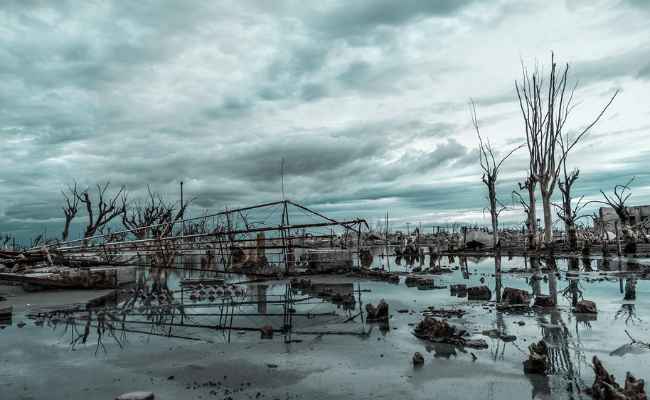
The devastating flash floods in Nepal should force governments, regulators and the insurance industry to reconsider whether our present approach to natural catastrophe risk is adequate. In a remarkably short period, settlements, roads, bridges, homes and other infrastructure were swept away. The recent flooding around Chitrakoot, Uttar Pradesh where the swollen Mandakini caused extensive damage to homes, shops, roads and a bridge, provides another reminder closer to home. Hundreds of hotels, homes, shops submerged in water within few hours even without heavy rains. People did not get time to react. These are not isolated warnings that can be forgotten once rescue operations end.
Climate change is increasing the complexity of catastrophe risk. Extreme rainfall, flash floods, landslides, heatwaves, cyclones and glacial events can create losses far beyond historical assumptions. The question is no longer whether such events will occur, but whether our cities, infrastructure, financial systems and insurance mechanisms are prepared when they do.
India certainly has disaster-management institutions, early-warning initiatives and mitigation programmes. The Government has approved Urban Flood Risk Management programmes covering major cities including Mumbai, Kolkata, Chennai, Bengaluru, Hyderabad and others, with substantial financial allocations. NDMA’s SACHET platform also provides geo-targeted disaster alerts. These are positive developments.
But we must ask a harder question: how much of our climate and disaster preparedness is actually visible at ground level?
Every major flood exposes familiar weaknesses: encroached water bodies, inadequate drainage, construction in vulnerable locations, poorly maintained infrastructure and insufficient local preparedness. We discuss climate resilience extensively at conferences, seminars and policy forums, but resilience has to be demonstrated in town planning, building standards, drainage systems, flood mapping, emergency communication and enforcement.
Imagine a Nepal-type sudden catastrophe affecting a densely populated part of Mumbai, Kolkata, Delhi, Bengaluru or another major city. The human and economic consequences could be enormous. Insurance penetration remains inadequate, meaning governments, businesses and households themselves would ultimately absorb much of the loss. Reports continue to highlight the substantial disaster protection gap in India.
This is where the insurance industry must become far more proactive. Insurers possess enormous data on floods, fires, storms and property losses. Why is this knowledge not being systematically converted into publicly useful catastrophe maps, vulnerability assessments and risk-prevention guidance? Insurers should work with municipalities, disaster-management authorities, infrastructure agencies and businesses before catastrophes occur, rather than merely assessing claims afterwards.
IRDAI also needs to take a more visible leadership role. Apart from discussions and industry seminars, where is the comprehensive roadmap for catastrophe insurance? India should seriously examine national or state-level catastrophe pools, parametric covers, affordable disaster protection for households and MSMEs, and public-private insurance mechanisms for extreme events.
Climate risk cannot remain another subject for conferences and reports. Government, regulators, insurers, reinsurers, engineers, urban planners and local authorities need measurable action plans with clear accountability.
Natural disasters cannot always be prevented. But the scale of human and financial loss can certainly be reduced. The real test of preparedness is not how effectively we respond after devastation. It is how much devastation we prevent before the next disaster arrives.
Authored by

Dr. Rakesh Agarwal
Editor
The Insurance Times
