




SALVAGE IN INSURANCE:
In motor insurance, salvage refers to the material value of the damaged parts of the vehicle in an accident, approved by the insurer to be sold in the market. In most accident cases it happens when the vehicle is damaged beyond repair.
In marine insurance, salvage is services are awarded to a third party to save maritime property from peril at sea. There are two types of salvage – Contract Salvage and Pure Salvage. Contract Salvage involves a contract stating fixed amount of salvage charges before the commencement of the salvage service. Pure Salvage means that salvage is undertaken without making any contract or agreement. Both parties agree to decide the salvage charges at a later date.
In commercial insurance, salvage means that once a claim is settled, the insurer takes ownership and offers it for sale to reduce its loss.
In aircraft insurance, salvage means – when the aircraft that sustains varying degrees of damages and is rendered a total loss by the insurer. The aircraft salvage is offered, as is where is, to the highest bidder.
 HOW DO WE LEARN?
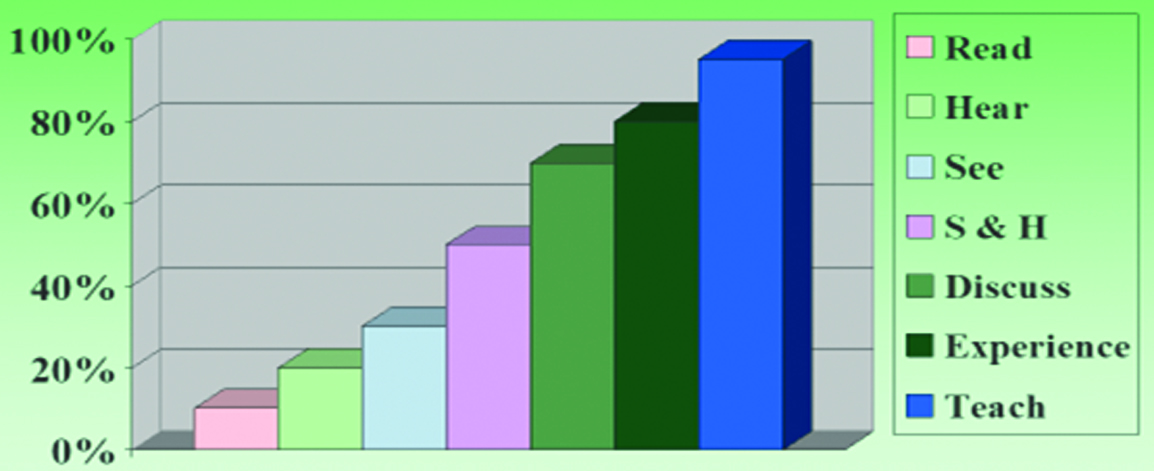
Lots of research is made in the world’s top universities – Oxford and Cambridge that can be summarized in the following manner:
Look at the above chart carefully. It summarizes a paper published by one of the world’s top universities. It says 90% of what we read is forgotten within 24 hours!!! Everybody does not teach and man doesn’t learn!
What is the most wonderful thing you observe in the world? The famed character of Mahabharat, Yudhishthir or Dharmaraj answered the above question in this manner:
We see thousands of deaths everyday yet we think we are permanent – that we will live forever. In fact, we cannot imagine ourselves to be dead! Religion, books and others say about the impermanence of life yet we think we are permanent.
From the insurance perspective, how do we learn? How can we minimize accidents? How can we save lives, disabilities and property? Except certain huge accidents that attract the attention of the world like – a plane crash or a cruise ship like Costa Concordia sinking in 2012, or a major train accident or the recent terrorist attack at Pahalgam on innocent people, none will catch the imagination of the public, or they will be quickly forgotten! After that it’s life as usual!
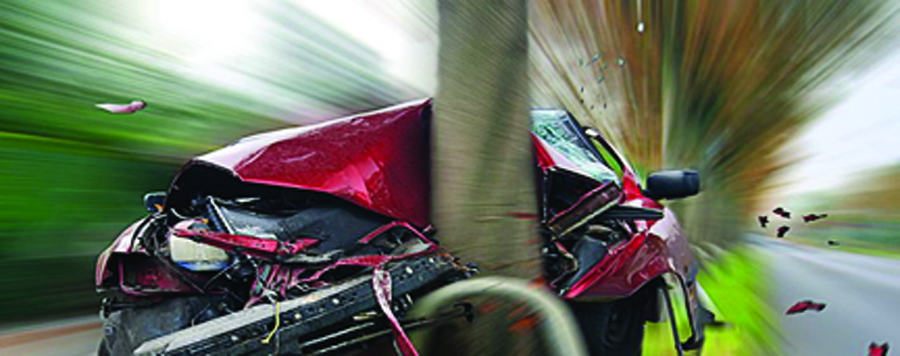 What is happening here? We are observing, we are understanding the mistakes committed or things we should have omitted; we resolve not to repeat similar mistake. These resolutions do not last 24 hours! We have to learn from our mistakes or from the mistakes of others. We should not repeat similar mistakes. Soon after an accident, an animal is very careful whenever it faces similar situation and man is not worse than an animal.
Insurance Salvage shall mean and implies that there was an accident resulting in the loss of property, lives or both. Insurer has paid his claim as per the policy terms and conditions. The salvage became insurer’s property. Salvage teaches a lot to the world…we can learn a lot from the salvage.
RING-A RING O’ ROSES
Ring-a-ring o’ roses,
A pocket full of posies,
A-tishoo! A-tishoo!
We all fall down.
Our children, when they read this nursery rhyme, look beautiful, adorable and very cute. We shower them with blessings, kisses and feel proud of their learning. But, do you know the meaning of Ring-a-ring o’ roses? Besides knowing that it is a nursery rhyme, we do not know anything about it. In fact, we have never learnt.
The above referred nursery rhyme has its origin in the dark ages. It is often suggested that the rhyme relates to the symptoms of plague – the Black Death, the bubonic plague that spread through Europe in the 1340s, or to the Great Plague of London, 1665/6. The plausible-sounding theory has it that the ‘ring’ was the ring of sores around the mouths of plague victims, who subsequently sneezed and fell down dead. A rosy rash was a symptom of the plague, and posies of herbs were carried as protection and to ward off the smell of the disease.
The 14th century plague wiped out half the population of Europe leaving the dead bodies thrown around in the streets of all major its cities. The observations of our ancestors were coined in beautiful phrases for example, in this case in the form of a nursery rhyme to enable to pass on to posterity. We did pass it on from generation to generation so that the children would learn about the great bubonic plague that spread through Europe. Did we learn? Do we understand the implications of this nursery rhyme? Let us leave it at this – you are the best judge here.
Coming back to salvage, what do we do with salvage? Must we not pass on the lessons learnt of a specific salvaged property for posterity? An accident can happen either in Kashmir or Kanyakumari, Kolkata or Coimbatore – wherever it happens, the lesson must be learnt and learnt by all. For example, wonderful and inexpensive creations can be manufactured from the salvaged property. One of them, for example, would be the police road blocks. Utilizing the useful parts from a salvaged property one can manufacture road blocks for the traffic use and regulation.
 Road Blocks can be manufactured from Salvage
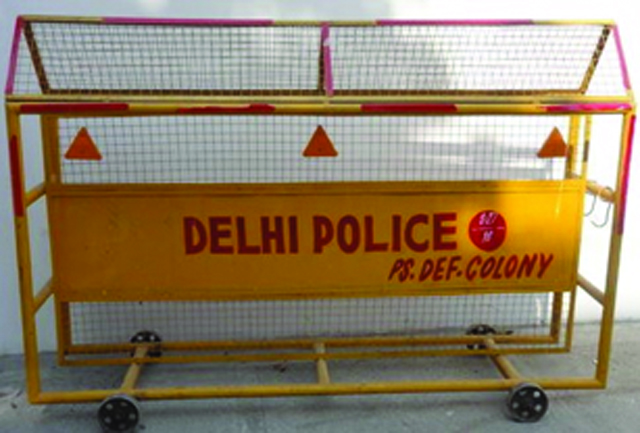
Rather than meaningless commercial advertisements on road blocks thus manufactured, print a QR code with basic details. Anybody who either scans the QR code or reads these details can know the origins of the road block, what was it before, how the road block came into being say, from a car, and thus it automatically tells the importance of safe driving and being safe.
Yet another salvage wonder could be key chains. This can be distributed free of cost by the insurers to its customers. When we refer to an insurer, it can be life or non-life insurance. Let the insurer distribute these along with new policy document or to a customer who has renewed his policy. This key chain will have a printed QR code with basic details. Anybody who either scans the QR code or reads these details can know the origins of the key chain, what was it before, how the key chain came into being say, from an airplane, and thus it automatically tells the importance of safety and being safe.
Thus, Salvage wonders shall aid for a continuous learning process. The children will also learn. Nowadays, who doesn’t use a smart phone? The way Ring-a-ring o’ roses was brought to the notice of children and adults alike, the effects of accidents, not following safety mechanisms would also be imbibed into the user’s psyche. Lifelong learning, and this learning never stops.
Insurers’ responsibility does not end with prompt and timely claim settlement. In fact, this is where it begins. For society’s benefit as well as their own, the insurers must see the horizons that lay beyond claims – greatest safety of the greatest number of people.
Depending on the size and/ or the utility of the salvaged property, any item can be produced. It could be a pin or a pen holder. From a pin to a piano – anything can be produced from salvage. All that is needed is the space to put a QR code and details to enable the interested parties to access such information. Thus, learning will happen from cradle to grave. Society becomes a safer place. People will start respecting the rights and obligations of others. They would stop swearing while driving rashly. The innocent, their wives / husbands, their children – lives saved. Though we know that we are impermanent, we acquire property for the benefit of our families. Thus, we can pass on the value-added property to the posterity. Salvage is a wonderful learning weapon. Any insurer can be discharged from responsibility by paying claims.
What causes accidents? The lack of education and the lack of understanding? No, these do not cause accidents. What causes accidents is our failure to learn from mistakes. We are stubborn to learn from our mistakes. We need to be taught about these mistakes committed across India, and that repeating them would result in disastrous results. We often talk of the seven wonders of the world. Here, the world itself will become a wonderful place when we learn from our mistakes. Don’t you think salvage is wonderful? Don’t you think salvage makes us lifelong students?
Not only the case that the insurance companies would offer to their customers these items produced from salvage, but also it becomes every organisation’s Corporate Social Responsibility (CSR) to educate society, their employees & their families. Let renowned companies like Google, Tata, Wipro, TCS, Municipalities and others offer these items for free to make our society, streets, cities a happier place to live and drive. Remember what Rabindranath Tagore has said:
“Where the mind is without fear and the head is held high
Where knowledge is free…”
The knowledge of accidents, the knowledge of disabilities, the knowledge of lives nipped at their budding stage and the knowledge the billions of dollars’ loss to society due to insurance salvage… this knowledge alone will make the society a wonderful place to live.
These insurance salvage wonders can also be distributed for free of cost to the school and college going children, to the pavement hawkers on their evening business and everyone else. The moot question arises: To who do we owe the responsibility? We owe the responsibility to the society. If it is a company then it is CSR; if an individual, then a moral responsibility. Do not expect the Government to do everything. The government cannot do everything. It is impossible. The government needs help – a helping hand from corporates and philanthropists. Mathew 4:19 says “Give a man a fish, and you feed him for a day. Teach a man to fish, and you feed him for a lifetime.”
Salvage is not wonderful per se. We are not glorifying salvage. What we are trying is glorify the mistakes committed by others and imploring the society to learn from them. That is the key issue. The king of Denmark in his speech to parliament remarked – due to social developments such as globalisation and an ageing population, our labour market and public services are no longer suited to the demands of the times. The classical welfare state is slowly but surely evolving into a ‘participatory society’ – one, that is, where citizens will be expected to take care of themselves, or create civil-society solutions for problems such as being safe or retiree welfare.
Insurance Salvage is wonderful. It can create a new, a safer, more efficient and committed society. Don’t you think salvage is wonderful?
Authored By:
Dr K. Rajagopal Reddy
PhD, FIII, FCII (UK), FLMI (US), FT
Chartered Insurance Practitioner
Topspot Insurance Broking Pvt. Ltd.
