



For many years, rural insurance in India has been primarily driven by intent. It is frequently mentioned in regulatory debates, inclusion goals, and social outreach initiatives, but is seldom integrated into the main business strategy. In the majority of boardrooms, it is viewed as a duty—something insurers are required to do rather than an opportunity to develop and grow.
That perception is precisely why the opportunity remains underestimated. Having worked closely with rural customers across health, accident and livelihood-linked covers, one insight consistently emerges. The constraint is not demand but design. Rural insurance struggles not because households cannot pay, but because the industry has historically tried to sell urban insurance in rural areas.
The gap is not demand, it is behaviour
Urban insurance adoption is driven by planning, while rural adoption is based on experience. A salaried professional typically purchases insurance during tax season or financial planning. In contrast, rural households consider protection after events like hospitalisation, livestock loss, business disruptions, or weather shocks. Their decision is often motivated by recent memories rather than future uncertainties. Explaining products with long-term projections and returns can make them seem abstract. However, framing them as income continuity makes them more relevant and understandable.
Rural families already spend significantly on managing risk, such as diversifying crops, borrowing from local networks, and storing inventory. Insurance competes with these coping mechanisms. Unless the product integrates into existing behaviour, it will not persist. This is why long-term savings products often lapse, while simple protection covers, such as personal accident or asset protection, see stronger renewal once understood.
Distribution economics decide viability
The biggest failure in rural insurance has been the distribution architecture. The industry has relied either on urban agents travelling outward or on heavily subsidised campaigns. Neither creates a sustainable book.
Rural insurance is effective when distribution channels are already in place for other purposes, like credit delivery, agri-input supply, local trade, or primary healthcare. In these setups, insurance acts as an additional service rather than a separate product. Since the relationship costs are covered by the primary activity, servicing remains feasible. However, rural distribution often lacks sufficient capital. One-time enrollments without renewal processes undermine long-term sustainability. Inadequate training causes mis-selling, and weak supervision leads to more disputes over claims.
Portfolio persistence can be improved not by changing policy features but by changing who explained them. A cooperative officer or field credit worker carried more credibility than a visiting insurance advisor. In villages, trust is local and continuous, not brand-driven and occasional.
This distinction matters to boards evaluating scalability. Rural insurance cannot be built through acquisition campaigns. It must be built through embedded relationships.
Risk is more diversified than assumed
Rural portfolios are often labelled high-risk because incomes fluctuate. In practice, they are frequently less correlated with urban books. From a portfolio perspective, rural insurance offers structural diversification. Urban books are often concentrated in motor, health, and SME segments—lines exposed to pricing pressure and competitive compression. Rural lines such as livestock, micro-enterprise, allied agriculture, and rural property exhibit different risk drivers.
Geographic dispersion and ecosystem-related underwriting can help lower concentration risk. Persistence tends to improve when relationships are built within communities. For insurers aiming for long-term margin stability, expanding into rural areas isn’t about taking on more uncertainty; it’s about accessing distinct risk pools.
Governance Determines Trust
Many rural initiatives fail not because of customers but because of poor execution. Targets are pushed at financial year-end, delivered through temporary campaigns, and measured by issuance. That builds numbers, not portfolios.
Rural insurance requires operational ownership, documentation support, claims assistance and periodic engagement. In close-knit communities, one unresolved claim can influence an entire cluster’s adoption. Trust builds slowly and erodes quickly. Rural customers value credibility. Claims paid on time travel faster than marketing campaigns.
Boards should therefore view rural insurance not as a risk exposure but as a governance stress test that strengthens institutional capability. Rather than the first-year premium, rural performance should be tracked through renewal cohorts and claim settlement turnaround time. Viability emerges as credibility accumulates.
From Obligation to Strategy
The industry’s central misconception is treating rural insurance as cross-subsidy. It is actually diversification.
India’s next wave of insurance growth will come from households whose economic exposure is rising faster than their financial buffers, small entrepreneurs, transport operators, dairy farmers and self-employed workers. Their risks are frequent but moderate, making them suited for protection-led models.
When built through ecosystem distribution, modular covers and accountable servicing, rural insurance offers lower acquisition costs over time, diversified risk pools and stable renewals. It becomes a predictable annuity business rather than a volatile expansion play.
The opportunity has always existed. The industry simply needs to design for how rural customers manage risk. Once that shift happens, rural insurance stops being a compliance exercise and becomes one of the most scalable growth markets in Indian insurance. When rural business is treated as peripheral, it remains peripheral. When treated as a core growth vertical, it scales.
The Call to Leadership
For boards, CEOs, strategy heads, investors, and policymakers, the question is no longer whether rural insurance should exist. The question is whether it will be treated with the seriousness of design.
India’s rural economy is becoming more integrated, financially savvy, and entrepreneurial. The market isn’t invisible—it’s just misunderstood. Opportunity awaits in this growth sector. The key question is whether leadership is ready to acknowledge it.
Authored by:
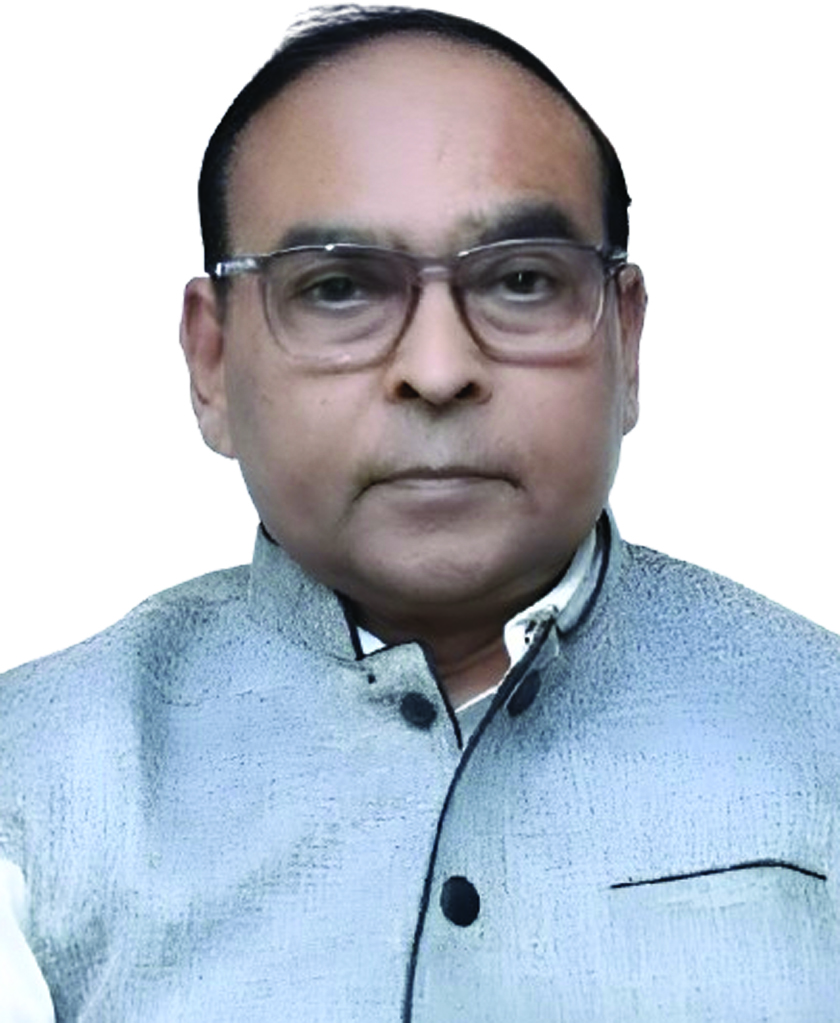
Dr. Ajay Verma, Head of Rural & Agriculture Insurance, Probus
