



Abstract
The insurance sector in India and is growing at a steady rate of 15-20% annually. Together with banking, insurance services add about 7% to the country’s GDP. A well-developed and evolved insurance sector is a boon for economic development as it provides long- term funds for infrastructure development at the same time strengthening the risk-taking ability of the country.
The Insurance Act in India was passed in 1938. The Life Insurance Corporation & General Insurance Council were established in 1956. In 1972, General Insurance Industry nationalized. From nationalization of the insurance industry in 1972 to the present day, in this span of about 50 years, the insurance industry in India has come a full circle. The insurance industry was liberalized in 2000. At the end of March 2019, there are 70 insurers operating in India; of which 24 are life insurers, 27 are general insurers, 7 are standalone health insurers and 12 are re-insurers including foreign reinsurer’s branches and Lloyd’s India. Conventionally, the insurance companies play a big role in the economic development of the nations. The insurance penetration of a country which is the premium underwritten as percentage of GDP is a measure of the maturity of insurance markets across the world. India together has almost 20 per cent of the world population and an underserved insurance market, has a huge growth potential in this sector. This paper is intended to study the development of insurance industry in India and where it stands at present.
Introduction
Insurance is an important financial risk transfer tool. The risk is being transferred from the insured (one who is buying insurance) to the insurer (the company which is selling insurance) on the payment of consideration called as the premium. This is an important financial product and is designed to take care of the interests of the insured in case a loss happens. The loss can be of life, health, assets. There are broadly two branches of insurance – Life and non-Life. While the life insurance is to take care of the needs of individuals and families in case of decease of their near and dear ones, the non-Life or general insurance products are to indemnify the financial loss to the assets due to an accidental loss. Worldwide, insurance forms the backbone of the financial sector and the economy. The insurance companies are usually cash rich and they hold the funds for investment in the various sectors of the economy.
Conventionally, the insurance companies play a big role in the economic development of the nations. The insurance penetration of a country which is the premium underwritten as percentage of GDP is a measure of the maturity of insurance markets across the world. India together has almost 20 per cent of the world population and an underserved insurance market, has a huge growth potential in this sector.
Table 1 – Snapshot of insurance penetration in India vs the world
| Penetration (premium as percentage of GDP ) | World | India |
| Life | 3.31 | 2.74 |
| Non Life | 2.78 | 0.97 |
| Overall | 6.09 | 3.7 |
Source: Swiss Re (2018-19) report
History of Insurance of India
In 1972, General Insurance Industry was nationalized. In 1973, GIC was set up. In 1993, Malhotra Committee setup to explore and to recommend means to reintroduce an element of competition by withdrawing the exclusivity of LIC and GIC. In 1994, Malhotra Committee submits report. In 1997, Insurance Regulatory Authority (IRA restyled as IRDA) established and in the year 2000, the insurance industry in India was liberalized. First Insurance Licenses in the private sector was issued to HDFC Standard Life for Life insurance and Royal Sundaram Alliance (RSA) and Reliance General Insurance for Non-Life Insurance.
Insurance Industry in India
The insurance sector is a colossal one and is growing at a steady rate of 15-20% annually. Together with banking, insurance services add about 7% to the country’s GDP. At the end of March 2019, there are 70 insurers operating in India; of which 24 are life insurers, 27 are general insurers, 7 are standalone health insurers and 12 are re-insurers including foreign reinsurer’s branches and Lloyd’s India.
Indian General Insurance Industry – Need for the right mix
The insurance Industry is at cross roads. The liberalization of Indian economy followed by the same for the general insurance industry has opened a lot of opportunity for growth and innovation along with its due share of challenges. However, it is a fact that the importance of the industry is known and appreciated from time immemorial even for a large country like India with such low insurance penetration. That fact is exemplified by the establishment of public sector insurance and reinsurance companies. But what had been alarming is still the low penetration of insurance in India.
The opening of the sector to private players and subsequently allowing of 74% FDI has given a thrust to the industry. The opening of the sector increases the scope for innovation in products, distribution strategies, service parameters and coming of the new players brings in global experience and expertise and best practices. This should bring in more maturity to the industry in terms of giving more leverage to the entities operating in the sector. That will help in developing a robust industry structure in line with the global insurance markets.
Major segments of Non-Life Insurance Business in India
The major product in non life insurance business in India are Fire, marine, health, motor, liability, etc. Fire business constitutes about 7%, marine = 2%, motor – 35%, health – 30% and the other lines make up remaining 26%.
There are two specialized insurers in India catering to specialized insurance products lines –
1. Export Credit Guarantee Corporation of India carrying on export credit insurance business in India and they have underwritten a gross direct premium of Rs. 1248 crore in 2018-19
2. Agricultural Insurance Company of India Ltd carrying on agriculture insurance business in India and they have underwritten a gross direct premium of Rs. 6901 crore in 2018-19. AIC is the main insurer under Pradhan Mantri Fasal Bima Yojana (PMFBY) and had also been insuring farmers under Restructured Weather based Crop Insurance Scheme (RWBCIS) and Coconut Palm Insurance Scheme (CPIS) and had also been insuring crop (apart from the above-mentioned Government sponsored schemes).
Insurance Pools – Terrorism Pool
The Indian Market Terrorism Risk Insurance Pool was formed with the initiative of all non-life insurance companies in India in April 2002, after terrorism cover was withdrawn by international reinsurers post 9/11 incident. The Pool is administered by GIC Re.
Insurance Pools – Nuclear Pool
The enactment of Civil Liability for Nuclear Damage Act, 2010 following the signing of 123 agreements with USA brought out the need for protection against catastrophic risk arising out of a nuclear accident. Indian Nuclear Insurance Pool (INIP) was formed in 2015 and is managed by GIC Re with an indemnity limit of 1500 crore, per location.
HEALTH INSURANCE BUSINESS- Health insurance business is classified into Government Sponsored Health Insurance, Group Health Insurance (Other than Government Sponsored) and Individual Health Insurance.
Personal Accident Business – During 2018-19, the Indian insurance industry has covered a total of 120.75 crore lives under Personal Accident Insurance.
The Overseas Travel Insurance and Domestic Travel Insurance products in the market.
MICRO INSURANCE
Microinsurance is to reach out to the lower economic spectrum of the population through affordable insurance products and solutions. IRDAI through micro insurance regulations in 2005 has created a platform to distribute insurance products, which are affordable to the rural and urban poor thus enabling financial inclusion of the masses. The distribution is primarily through Non-Government Organizations (NGOs) and Self Help Groups (SHGs) . The major General Micro Insurance products are health insurance, cover for belongings, such as, hut, livestock or tools or instruments, personal accident, etc. Types of Micro Insurance Product offered by general insurers are Cattle Insurance Policy, Agriculture Pumpset Insurance Policy, Janata Personal Accident Policy, Silkworm Sukshma Policy, Sheep & Goat Micro Insurance Policy, householders Policy etc.).
General and Health Insurance –
The penetration of General (Non-Life) insurance and Health insurance in India is even lower than the Life insurance market. Thus the majority of the market is constituted by Motor and others which consists of Health insurance also. Though there had been some push in the market in regard to Health insurance due to increased awareness particularly among the middle class population and also due to Government schemes, but the proportion of other important lines of General insurance products like Fire is very low.
Around 60% of the Indian subcontinent landmass is vulnerable to earthquakes and other natural catastrophes, and at least 38 Indian cities lie in high-risk seismic zone. Further, most Indian cities are densely populated and do not adhere to best architectural layout standards. Also, a majority of both residential and commercial premises do not comply with earthquake and flood resistance safety guidelines. These aspects make them highly vulnerable to natural and man-made perils.
As regards, health insurance in India, the top 5 states account for 66% of the total Health Insurance premium
Conclusion
Thus, taking into account various needs of reaching higher penetration, awareness, innovation in the industry, opening up of sector, globalization, etc, the government decided to liberalize the industry in 2000 allowing new private sector and also FDI in the sector.
In India, due to lesser awareness levels and education on insurance, the sector has not been able to see the desired results. The assets of individuals are left unprotected. Also, the sector had not been able to reach its potential as custodian of funds for national development and protection of assets.
But things are changing in India as well. The government initiatives in terms of providing protection to the uninsured population for life, health and crops are steps to improve insurance coverage and penetration levels. However, creating more awareness at the individual level and designing products keeping in view the general population needs for protection are the needs of the day. This calls for more innovation, larger investment in technology to reach out to the masses at the different segments of the population. Also, in several insurance product lines, misspelling is a big issue. Thus, insurance sector requires developing and distributing innovative and appropriate products to fulfill the needs of the different sectors of the economy and different segments of the population by creating awareness and reach.
Authored By:
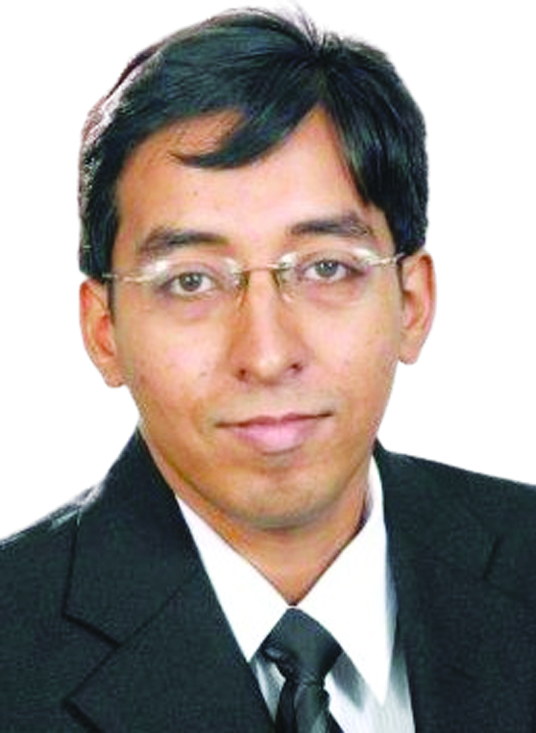
Amitava Banik
Assistant Vice President – Commercial Underwriting
Reliance General Insurance Co Ltd, Kolkata
Brief profile of author
Amitava Banik is an insurance professional. He holds a Bachelor of Engineering (BE) degree in Electronics & Communication from Visveswariah Technological University (VTU), Belgaum (Karnataka) and a Post Graduate Diploma in Management (PGDM) in Insurance Business from Birla Institute of Management Technology (BIMTECH), Greater Noida (UP). He is a Fellow of the Insurance Institute of India (FIII). He has also completed a Certificate course on “Disaster Preparedness and Safety” from Jadavpur University. He has about 19 years of rich professional experience spanning across diverse sectors ranging from engineering to insurance and he is presently working as Associate Commercial Underwriting Head – Kolkata at Reliance General Insurance Co Ltd.
