




Abstract
India’s rapid digital transformation, driven by increasing internet penetration, digital payments, and government-led initiatives like Digital India, has significantly expanded its cyber threat landscape. Cyber-attacks such as data breaches, ransom ware, phishing, and denial-of-service incidents are rising sharply, targeting sectors including finance, healthcare, critical infrastructure, and small businesses. In response to this escalating threat, cyber insurance has emerged as a strategic risk transfer mechanism, enabling organizations to manage financial losses associated with cyber incidents. This study aims to critically assess the relevance and effectiveness of cyber insurance within the Indian cyber security ecosystem. By examining the gaps between cyber risk exposure and insurance preparedness, this paper offers insights into the strategic role cyber insurance can play in enhancing national cyber resilience.
Introduction
In today’s digital world, organizations face growing risks from cyber threats like ransom ware, data breaches, and phishing attacks. These incidents can lead to heavy financial losses, legal trouble, and damage to reputation. With India’s rapid digital growth driven by initiatives like Digital India, UPI, fintech expansion, and online banking the country has become more exposed to cyber threats. To deal with these challenges, cyber insurance has emerged as an important tool. It helps organizations recover by covering the costs of cyber incidents such as system repairs, data recovery, business interruption, and legal expenses. Rather than facing the entire loss alone, companies can shift some of the risk to insurance providers. However, cyber insurance does not replace cyber security efforts but adds an extra layer of protection. It helps cover a wide range of expenses, including investigating breaches, restoring systems, legal consultations, notifying affected customers, managing public response, and even paying ransom if needed. As the number of cyber-attacks increases, demand for cyber insurance is growing rapidly. The global cyber insurance market reached approximately $16.6 billion in premiums in 2024, reflecting its rising importance in helping businesses stay resilient in the face of digital threats.
Cyber Security Insurance
Cyber security insurance, also known as cyber liability insurance, is a policy designed to help organizations mitigate risk exposure by offsetting the costs involved with recovery after a cyber-related security breach or similar events. This insurance covers financial losses arising from data breaches, network damage, cyber extortion, and other cyber threats.
Table -1: Major Causes of Breaches
| Causes | Breaches Caused (%) |
| Hacking | 45% |
| Errors (human, technical, system) | 22% |
| Social attacks | 22% |
| Malware | 17% |
| Misuse by authorized users | 8% |
| Physical actors | 4% |
Types of Cyber Security Insurance and its Relevance
Cyber security insurance in India is broadly categorized based on the type of insured party and the nature of the risk covered. Insurers offer tailored policies for individuals, small and medium enterprises (SMEs), and large corporations. However, some of the main types of cyber security insurance available in India are identified and presented below in the (Figure -1) and a brief analysis of the same.
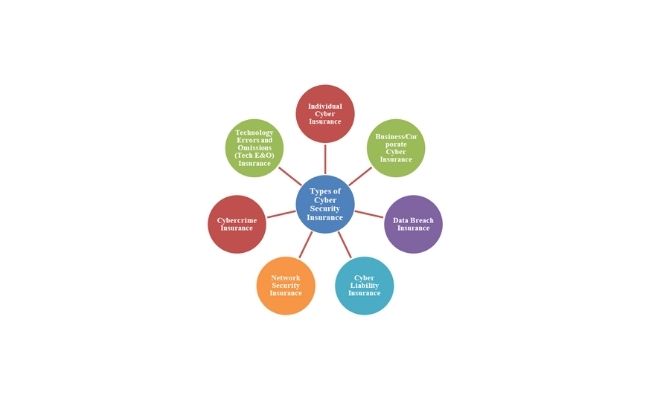
1. Individual Cyber Insurance: Individual cyber insurance policies are designed to protect people from personal cyber risks. With the rise in online banking, digital payments, social media, and e-commerce usage, individuals are increasingly vulnerable to cybercrimes like identity theft, phishing, cyber bullying, and online fraud. These policies typically cover financial losses arising from unauthorized online transactions, misuse of personal data, cyber stalking, and defamation. They may also offer support services such as helplines, legal counsel, and psychological counseling for victims of cyber bullying or online harassment. Leading insurers like HDFC ERGO and ICICI Lombard offer customizable individual cyber insurance plans in India.
2. Business/Corporate Cyber Insurance: This type of insurance is designed for businesses of all sizes to protect against cyber threats that can disrupt operations, cause data breaches, and result in financial and reputational damage. Business cyber insurance generally includes both first-party and third-party First-party coverage includes expenses directly incurred by the business such as data restoration, business interruption, and incident response costs. Third-party coverage protects against legal liabilities arising from customer or partner data breaches, regulatory fines, and lawsuits. Policies are often tailored based on the size, industry, and digital maturity of the business, with comprehensive coverage offered to sectors like finance, healthcare, IT, and e-commerce.
3. Data Breach Insurance: Data breach insurance is a specialized form of cyber insurance that focuses on covering the costs related to the loss, theft, or exposure of sensitive data such as personally identifiable information (PII), health records, and financial information. This type of insurance is critical for organizations that handle large volumes of customer or employee data. It typically covers expenses such as customer notification, credit monitoring services, forensic investigations, legal fees, and PR/crisis management efforts. Given the rising frequency of data breaches in India, many companies, especially those governed by data protection laws, are opting for this targeted coverage.
4. Cyber Liability Insurance: Cyber liability insurance provides protection against claims made by third parties affected by a cyber-attack on the insured organization. This includes lawsuits filed by customers, clients, or regulators for loss of personal or financial data. The policy typically covers legal defense costs, settlements, and court-ordered compensations. It is especially relevant for businesses that store client data or provide digital services. This insurance ensures companies can defend themselves legally without bearing crippling out-of-pocket costs, making it an essential risk management tool in sectors like IT services, consulting, and finance.
5. Network Security Insurance: Network security insurance is focused on the protection of an organization’s IT infrastructure and network. It covers damages resulting from unauthorized access, malware infections, denial-of-service (DoS) attacks, and hacking incidents that affect the company’s network operations. This type of policy generally includes costs for investigating and mitigating the breach, restoring systems, and recovering lost data. As organizations increasingly rely on cloud computing, remote work, and interconnected devices (IoT), network security insurance becomes a crucial part of their cyber risk strategy.
6. Cybercrime Insurance: Cybercrime insurance covers financial losses due to criminal cyber activities such as online fraud, phishing scams, social engineering attacks, identity theft, and ransom ware. It is particularly useful for both individuals and organizations that are frequently targeted by cybercriminals. The policy may include reimbursement for stolen funds, ransom payments, and expenses related to fraud resolution and legal representation. In India, with the surge in digital payment adoption and online transactions, cybercrime insurance is becoming an increasingly popular option among both consumers and businesses.
7. Technology Errors and Omissions (Tech E&O) Insurance: This is a specialized type of insurance for IT service providers, software developers, and technology consultants. It covers claims arising from negligence, mistakes, or failure to perform contractual services that result in client losses. For instance, if a software bug causes a client’s data breach, the client may sue the developer. Tech E&O insurance covers legal fees, settlements, and damages in such scenarios. It often includes elements of both professional liability and cyber liability coverage, making it essential for tech-driven businesses in India’s booming startup and IT ecosystem.
Global Cyber Security and Frauds: An Overview
1. Rising Global Cybercrime Costs: In 2025, the global cost of cybercrime is projected to reach $10.5 trillion annually, up from $8.4 trillion in 2022. This dramatic increase reflects the growing sophistication of cybercriminals, expansion of digital services, and the rising value of data. Cybercrime has now become more profitable than the global drug trade, making it a top-tier threat to global economies.
2. Ransom ware Continues to Surge: Ransom ware remains one of the most destructive forms of cyber-attacks in 2025. According to recent data, over 70% of global organizations reported being targeted by ransom ware at least once in the past year. The average ransom demand has crossed $1.6 million, while the average cost of recovery from a ransom ware attack is estimated at $4.5 million, including downtime, reputational damage, and data restoration.
3. Phishing and Social Engineering: Phishing attacks still dominate the global cyber threat landscape. In 2025, over 90% of cyber breaches were initiated through phishing emails or social engineering tactics. The number of phishing websites has increased by over 25% compared to 2024, with major brands like Microsoft, Google, and Amazon most frequently impersonated in phishing campaigns.
4. Business Email Compromise (BEC): BEC attacks have caused more than $3 billion in losses globally in 2025 alone. These scams target corporate executives and finance departments to manipulate fund transfers. With deep fake audio and AI-generated emails becoming more common, the success rate of such attacks has risen significantly, posing a major challenge to enterprise cyber security.
5. IoT and Cloud Vulnerabilities: As cloud computing and IoT (Internet of Things) devices continue to grow, so do their associated risks. In 2025, over 60% of cyber incidents in enterprises involved either a cloud misconfiguration or an unsecured IoT device. The lack of standardized security protocols for IoT ecosystems continues to be a weak point exploited by hackers worldwide.
6. Cyber security Talent Gap: Despite the rising threat landscape, the global cyber security workforce shortage remains severe. In 2025, the cyber security workforce gap stands at over 4 million professionals This shortage has made many organizations vulnerable due to the lack of skilled personnel to monitor, detect, and respond to threats in real time.
7. Global Regulatory Pressure and Compliance: With rising cyber threats, governments around the world have tightened cyber security regulations. In 2025, more than 80 countries have introduced or updated their data protection and cyber security laws. Regulatory frameworks like the EU’s NIS2 Directive, India’s DPDP Act, and the S. Cyber security Executive Order now mandate stricter compliance and incident reporting requirements.
8. Cyber Insurance Uptake: The global cyber insurance market is witnessing robust growth in 2025, valued at over $30 billion, with a compound annual growth rate (CAGR) of around 20%. However, rising claims have led insurers to impose higher premiums and stricter policy conditions. Claims related to ransom ware and BEC scams constitute the largest share of payouts.
9. AI and Cyber security – Double-Edged Sword: Artificial Intelligence is playing a crucial role in cyber security in 2025. While AI-powered tools are helping detect threats faster and automate responses, cybercriminals are also using AI to create more convincing phishing content, deep fakes, and malware that can evade traditional detection systems. The use of generative AI in cyber frauds is an emerging challenge for security experts.
10. Global Cooperation and Cyber Warfare: Nation-state attacks and cyber espionage are on the rise, targeting critical infrastructure like power grids, healthcare systems, and financial institutions. In 2025, over 40% of state-sponsored attacks are aimed at disrupting geopolitical stability. This has led to increasing international cooperation through forums like INTERPOL’s Global Cybercrime Strategy and NATO’s Cyber Defense Policy to strengthen global cyber defense mechanisms.
AI as an Influencer of Cyber Crime
1. AI-Driven Phishing and Social Engineering: Artificial Intelligence is significantly enhancing the effectiveness of phishing attacks. In 2025, over 85% of successful phishing campaigns are estimated to use AI-generated emails or messages. AI can now mimic writing styles, personalize messages using publicly available data, and craft highly convincing content that bypasses traditional spam filters. Natural Language Processing (NLP) tools also allow attackers to generate error-free, believable phishing emails at scale, increasing their success rate.
2. Deep fakes and Voice Cloning: AI-powered deep fake technology is being exploited in cybercrime to impersonate individuals especially CEOs, politicians, and financial officers. In 2025, deep fake-related scams increased by 23% compared to 2024, with voice cloning frauds contributing to over $250 million in global financial losses. Attackers have used AI to replicate voices in real-time to trick employees into authorizing fraudulent transactions or releasing sensitive information.
3. Automated Malware and Ransom ware Creation: AI is also being used to develop sophisticated malware that can adapt in real-time to evade detection. Autonomous ransom ware strains powered by AI can now identify high-value files, encrypt them faster, and adjust their ransom demands based on the victim’s financial profile. Studies in 2025 report that 47% of newly detected malware variants have AI-driven obfuscation techniques, making them much harder for conventional antivirus tools to catch.
4. AI in Password Cracking and Brute Force Attacks: Cybercriminals are using machine learning algorithms to optimize brute force attacks and password cracking. AI can analyze patterns from leaked password databases to predict and generate likely combinations with higher accuracy. In 2025, it is estimated that AI-accelerated password cracking tools reduce the time required to break an 8-character password by up to 80% compared to traditional methods.
5. AI in Bypassing Security Systems: AI is being weaponized to study and learn the behavior of network defenses, such as firewalls and intrusion detection systems. By mimicking normal user behavior, AI-enabled malware can infiltrate systems without triggering alarms. In 2025, over 60% of AI-assisted cyber-attacks involved methods that evaded AI-based security systems showing that attackers are keeping pace with defenders in the AI arms race.
6. AI-Powered Botnets and Distributed Attacks: Attackers now employ AI to control large-scale botnets more efficiently. These smart botnets can self-organize, detect vulnerabilities across networks, and launch distributed denial-of-service (DDoS) attacks with precision. In 2025, AI-coordinated DDoS attacks grew by 31%, with average attack durations increasing due to the bots’ adaptive strategies.
7. Fraud Detection Evasion: AI is helping cybercriminals evade detection in financial systems by mimicking legitimate transaction patterns. In the fintech sector, over 35% of detected fraud attempts in 2025 involved AI techniques designed to avoid triggering fraud detection algorithms. Criminals use adversarial AI models to “test” security algorithms and refine their fraud tactics until they succeed.
8. Generative AI in Cybercrime-as-a-Service (CaaS): Cybercrime syndicates are offering AI-based tools as a part of underground services. For example, generative AI is being sold on the dark web to automate phishing site creation, write malicious code, and develop fraudulent mobile apps. Reports in 2025 indicate a 40% increase in dark web listings that include AI-powered hacking tools.
Need and Importance of Cyber Security Insurance in India
- Increasing Cyber Threats: With the rise in internet usage and digital transactions, India has seen a sharp increase in cyber-attacks like phishing, ransom ware, and identity theft. Cyber insurance helps individuals and businesses recover from these attacks by covering financial losses and legal costs.
- Protection Against Financial Loss: Cyber-attacks can result in heavy financial damage due to data breaches, business interruptions, and fraud. Cyber security insurance provides compensation for these losses, helping companies stay financially stable during crises.
- Support for Small and Medium Businesses (SMEs): SMEs in India often lack strong cyber security infrastructure. Cyber insurance offers a safety net by covering costs related to data recovery, system repair, and customer notifications in case of a breach.
- Compliance with Regulations: With the introduction of data protection laws in India (like the Digital Personal Data Protection Act), businesses are required to safeguard customer data. Cyber insurance helps meet legal obligations and cover penalties for non-compliance.
- Crisis Management and Legal Help: In case of a cyber-attack, insurance providers offer expert support for managing the situation. This includes legal advice, public relations support, and forensic investigations to identify the source and prevent future attacks.
- Reputation Protection: A data breach can harm a company’s reputation. Cyber insurance often includes services to manage brand image, handle customer communication, and reduce long-term damage to trust.
- Growth of Digital Economy: As India moves toward a digital economy with increased online banking, e-commerce, and digital payments, cyber insurance is becoming essential to protect digital infrastructure and maintain consumer confidence.
- Encourages Better Cyber Hygiene: Insurance companies often assess and improve a business’s cyber security practices before issuing a policy. This motivates companies to follow stronger safety measures and reduce their overall risk.
Indian Cyber Security Insurance Industry: A Critical Assessment
- Emerging but Underpenetrated Market: The cyber security insurance sector in India is still in its early growth stage. As of 2024, less than 1% of Indian businesses have cyber insurance coverage, compared to over 30% in developed markets like the US. This shows a significant gap in awareness and adoption despite rising cyber threats.
- Growing Demand Amid Rising Threats: India witnessed a more than 20% increase in cybercrime cases in 2023, with over 4 million cyber security incidents reported by CERT-In (Indian Computer Emergency Response Team). This growing threat has triggered increasing interest in cyber insurance, especially among IT, banking, and e-commerce sectors.
- Limited Awareness and Understanding: Many Indian businesses, especially SMEs, still lack awareness about cyber risks and the benefits of insurance. A recent survey showed that over 60% of Indian firms do not fully understand what cyber insurance covers or how to buy the right policy.
- Insufficient Product Customization: Most Indian insurers offer basic cyber policies that are often adapted from global templates. These policies may not address the unique needs of Indian businesses, such as low-cost coverage for small businesses or local regulatory risks, making them less attractive to potential buyers.
- High Premiums and Low Claim Rates: Due to limited data and high risk, cyber insurance premiums in India are relatively expensive. Additionally, the claim ratio remains low, as many businesses either do not report incidents or are unsure how to file claims. This affects customer confidence in the product.
- Lack of Skilled Cyber Underwriters: The industry lacks professionals trained in cyber risk assessment and underwriting. This leads to inaccurate pricing, inadequate risk evaluation, and hesitation among insurers to offer wider coverage, especially to high-risk sectors.
- Regulatory Push and Policy Support Needed: Although India introduced the Digital Personal Data Protection (DPDP) Act in 2023, there is still no mandatory framework pushing businesses to adopt cyber insurance. A stronger regulatory mandate and government incentives could help boost adoption.
- Future Potential and Market Outlook: Despite current challenges, the Indian cyber insurance market is expected to grow at a CAGR of 25-30% over the next five years. As digitalization deepens and awareness improves, insurers are likely to develop more affordable and targeted products for various sectors.
Government and Regulatory Guidelines on Cyber Security Insurance in India
The Indian government and key regulatory bodies like IRDAI, RBI, and SEBI have started taking important steps to strengthen cyber security and promote cyber insurance. The Insurance Regulatory and Development Authority of India (IRDAI) has advised insurance companies to develop standard cyber insurance policies and improve claim processes to encourage wider adoption. It has also asked insurers to educate customers about cyber risks and coverage options, especially for individuals and small businesses.
The Reserve Bank of India (RBI) has issued strict guidelines on cyber security for banks and financial institutions, requiring them to have strong IT security frameworks. While not making cyber insurance mandatory, RBI encourages banks to assess their cyber risk exposure and consider insurance as a risk transfer tool. However, the Securities and Exchange Board of India (SEBI) also issued a circular in 2023 mandating listed companies and market infrastructure institutions (like stock exchanges) to follow strict cyber security measures. SEBI recommends having cyber insurance to manage potential financial losses due to data breaches or operational disruption. The Government of India, through its National Cyber Security Policy and the DPDP Act (2023), has emphasized the need for businesses to secure customer data and ensure business continuity. While cyber insurance is not yet compulsory, these regulatory efforts are helping build awareness and trust in cyber insurance as an essential part of India’s digital safety strategy.
| Authored By:
Dr. Jyothi G. H. |
| Assistant Professor
Department of MBA PES Institute of Technology and Management Shivamogga, Karnataka (State) |
